
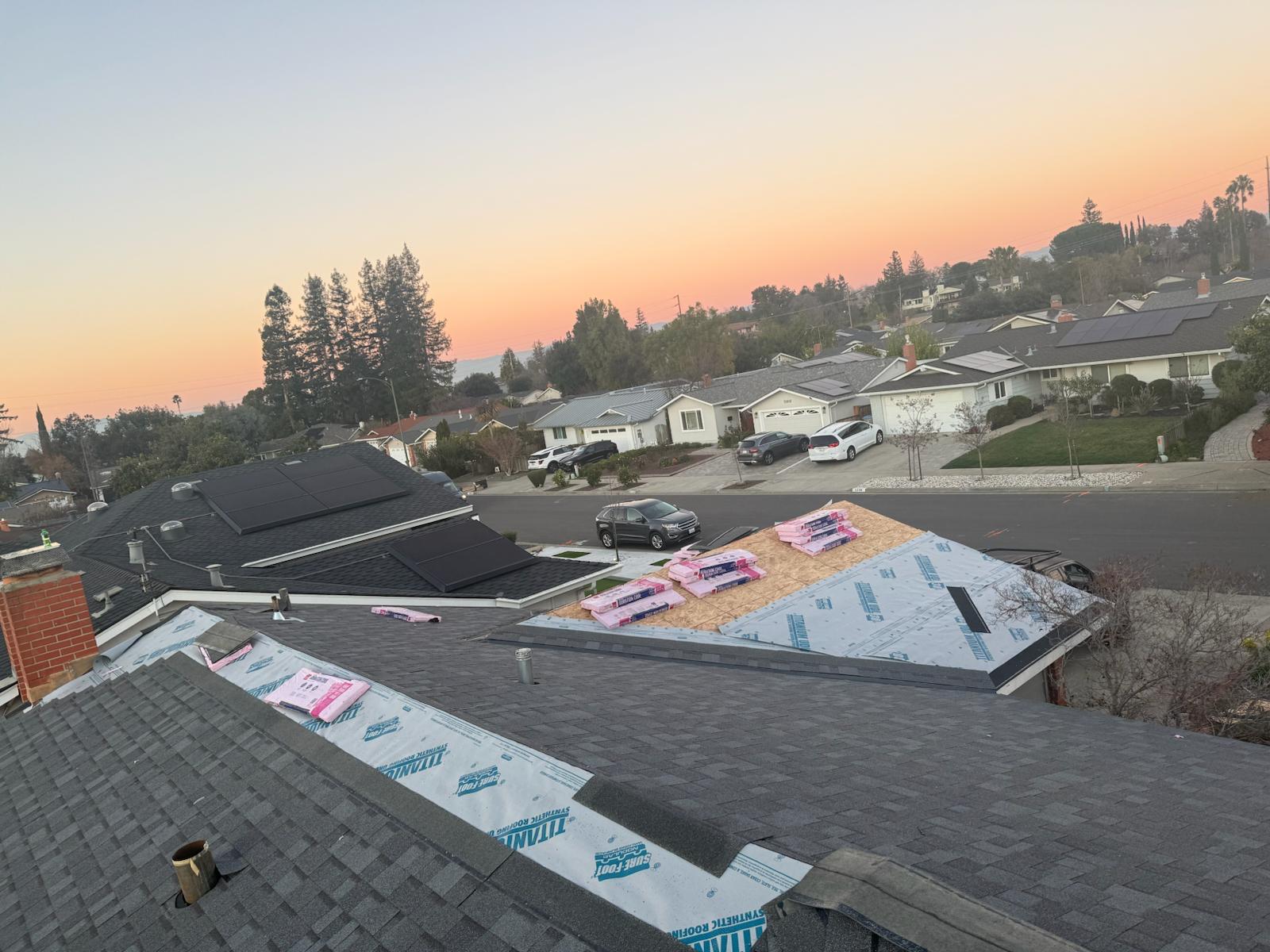
Two of the most common options homeowners consider are standard 3-tab shingles and architectural (also called dimensional or laminated) shingles. In short, 3-tab shingles are the classic option. They’re thinner, single-layer roofing materials designed for affordability. Architectural shingles use a thicker, multi-layer design that makes your roof more durable and improves your home’s curb appeal. On this page, Top Home Roofers explains the differences between architectural shingles vs 3-tab shingles – so you can decide which is best for your roof and your long-term plans.
What Are Standard Roof Shingles?
Historically, 3-tab asphalt shingles were probably what people meant by ‘standard roof shingles’. (These days, architectural shingles, discussed below, are actually the more common choice!)
3-tab shingles are so named because each shingle strip is cut into three uniform tabs. They’re made from a single layer of asphalt-coated fiberglass or, in the past, organic mat. As such, it has a consistent thickness across the entire shingle. This helps keep manufacturing costs down and makes them lightweight and easier for roofers to handle.
Because they’re affordable, usually built to meet local code, and relatively simple to install, 3-tab shingles are an excellent option for budget-conscious roof replacements, rental properties, garages and sheds, and homes where you expect to sell in the relatively near future.

What Are Architectural Shingles?
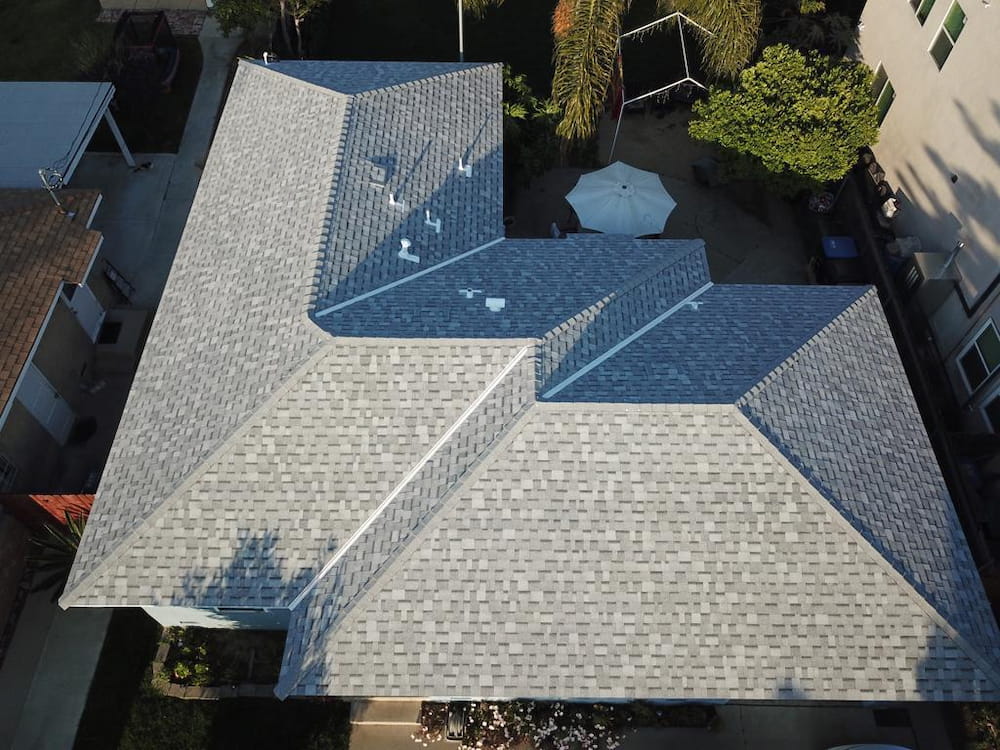
Architectural shingles are a more advanced form of asphalt roofing. They’re sometimes known as dimensional or laminated shingles. Architectural shingles are made using asphalt, but they were developed to mimic the appearance of wood shake or slate roofing.
Instead of a flat layer, manufacturers produce architectural shingles from multiple bonded layers (known as ‘laminating’) of asphalt material. They shape and stagger these layers to vary the thickness across the shingle. This thickness variation makes the shingle more durable and can better resist the weather.
The added depth and texture also help architectural shingles create a more visually interesting roofline. Today, they’re probably the most popular asphalt shingle choice for modern residential homes.
Key Differences in Construction and Thickness
- Materials: 3-tab shingles use a single asphalt layer. Architectural shingles laminate multiple bonded asphalt layers for greater strength.
- Material thickness is even across 3-tab shingles. In architectural shingles, the thickness is varied for greater strength and depth.
- When it comes to weight, 3-tab shingles are lighter and easier to handle, whereas architectural shingles are heavier – but as such, more resistant to wind.
- Build quality is higher with architectural shingles. However, 3-tab shingles still hold up reasonably well.
Appearance and Curb Appeal Comparison
| Feature | 3-Tab Shingles | Architectural Shingles |
| Overall Appearance | Flat, uniform, repetitive pattern | Dimensional, textured, visually dynamic |
| Depth & Texture | Single-layer design with minimal depth | Multi-layered design with visible depth |
| Shadow Lines | Minimal shadowing | Stronger shadow lines for added character |
| Best for Home Style | Simple roof designs and modest homes | Larger, more ornate, or upscale homes |
| Visual Impact | Clean and simple look | Richer, more detailed appearance |
| Curb Appeal | Acceptable for basic designs but may look plain or dated on larger homes | Enhances curb appeal and adds character |
| Design Trend | Traditional and basic option | Increasingly preferred by builders and renovators |
Both architectural shingles and 3-tab designs can enhance your home’s curb appeal. However, architectural shingles are likely to enhance it more. The single-layered 3-tab shingles create a flat, repetitive pattern on your roof. It looks uniform and with minimal shadowing. If you have a simple roof design, a clean look like this can be perfectly acceptable. But if you have a larger or more ornate home, or live in a particular area of town, this uniform appearance could make your roof look plain or out of date.
That’s why so many home builders and renovators are turning to architectural shingles. These offer visible depth, texture, and stronger shadow lines, which naturally add more character to a home, thus enhancing its appearance and curb appeal.
Durability and Lifespan Expectations
| Feature | 3-Tab Shingles | Architectural Shingles |
| Average Lifespan | 15–25 years under normal conditions | 25–40 years |
| Wind Resistance Rating | Typically 60–70 mph (manufacturer dependent) | Typically 110–130 mph (manufacturer dependent) |
| Layer Construction | Single-layer design | Thicker, multi-layer design |
| Resistance to Wind Uplift | More vulnerable to lifting | Much better resistance to wind uplift |
| Weather Resistance | Less resistant to storms and severe weather | Strong resistance to heavy rain, snow, and temperature swings |
| Cracking Potential | More likely to crack due to single-layer design | Less prone to cracking due to added thickness |
| Best Climate Suitability | Mild climates without frequent high winds | Challenging climates with high winds and severe weather |
| Overall Reliability | Basic durability | More reliable long-term roofing option |
3-tab shingles typically last between 15 and 25 years under normal conditions with average maintenance. They usually have lower wind-resistance ratings, often around 60 to 70 mph (manufacturer dependent). Of course, that also makes them more vulnerable to lifting and storm damage, and because they’re only a single layer, they’re more likely to crack too. In other words, 3-tab shingles are certainly more suited to mild climates without frequent high winds or severe weather.
Architectural shingles usually last much longer – somewhere between 25 and 40 years. These shingles are commonly rated for much higher wind speeds too, typically between 110 and 130 mph (manufacturer dependent). Because they’re thicker and built in layers, they’re much better at resisting wind uplift, temperature swings, heavy rain, and even snow. Overall, architectural shingles are a more reliable roofing solution, especially in challenging climates.
Cost Comparison: Upfront vs Long-Term Value
One of the first things most homeowners worry about in a roofing shingle comparison is the cost, and rightly so. However, it’s important to consider what you get for what you pay. Upfront, 3-tab shingles are the cheaper option. They have a lower material cost and they’re quicker to install.
However – architectural shingles may cost more (around 20% to 40% more) than 3-tab shingles, but they usually last much longer (as discussed above). They’re also less likely to need repairs, hold their aesthetic for longer, and can improve your home’s resale value. When you factor all this in, architectural shingles almost always provide better long-term value for your investment.
Installation Considerations for Roof Shingle Types
3-tab shingles are lightweight and flexible. As such, roofers can install them much faster, even on the simplest roof structures. Their thin build also means minor installation errors are sometimes more forgiving. However, those same characteristics make them less durable to the weather.
Architectural shingles are heavier and require more precise alignment (and, therefore, more labor time). Roofers also need to make sure that the roof is structurally sound and able to support the weight of your architectural shingles. (In residential contexts, this is rarely a problem. However, it’s a roofer’s duty to check it as part of their initial assessment.)
Which Shingle Makes Sense for Your Home?
With all that discussed, which is better for your home? Architectural shingles vs 3-tab shingles? We recommend architectural shingles are usually the best value for money. The only exceptions might come if your roof’s structure would also need an upgrade, if you’re planning on moving soon, or if you don’t have the funds for architectural shingles right now.
We recommend speaking with a trusted local roofer. If you’re in the Bay Area, get in touch with Top Home Roofers today for an expert chat about what your home needs and how we can help.