

TOP HOME ROOFERS · SAN JOSE
Your tile roofing team in San Jose
Top Home Roofers helps you plan the tile work and the layers beneath it. Our team explains the findings, puts the proposed scope in writing and keeps you informed through a designated contact. Property protection, material handling and cleanup are part of that conversation.
Keeping the character of your home matters, but so does understanding what the roof needs beneath the tile. We discuss the visible covering and the proposed underlying work together, so you can evaluate the recommendation as a roof project rather than a material purchase.
Tile roofing projects and preparation
Explore a finished tile roof and preparation from a separate tile project in our portfolio. The preparation view shows the underlayment before the tiles cover it.
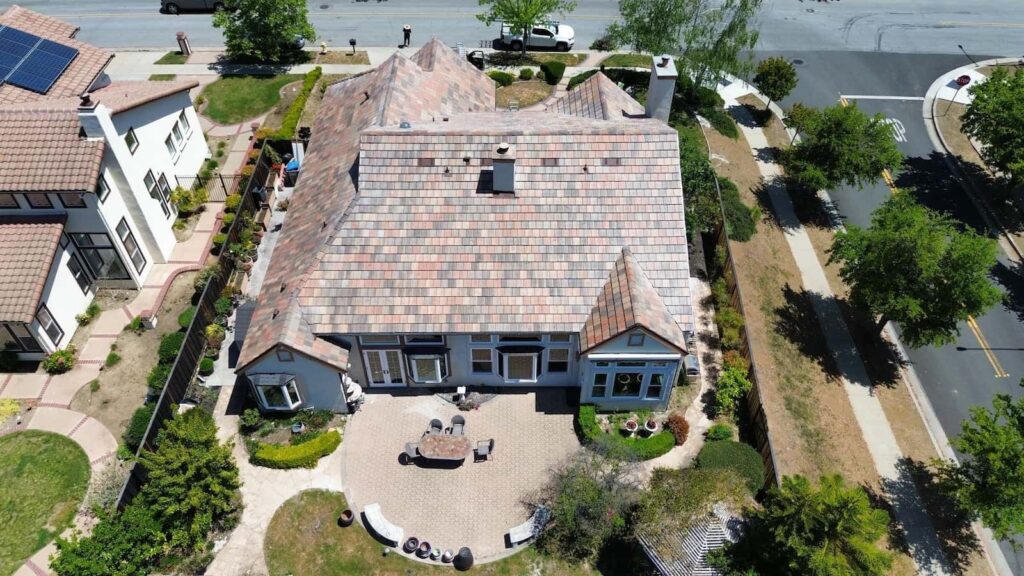

The completed roof shows how the tile profile and color blend read across the full roof. The preparation image shows a different job before the covering is complete. Together, these examples make the visible finish and the hidden layers easier to discuss with our team.
Your scope should identify the particular areas being opened, how tiles will be handled and the underlayment and flashing work included. If suitable existing tiles may be kept, clarify the reuse plan and how replacement pieces would be sourced before approving that approach.
A leak does not tell the whole story
A ceiling stain shows where water reached the inside, but it does not identify every failed roof detail. On a tile roof, the visible covering and the layers beneath it need separate attention. Replacing one cracked tile will not address an unrelated flashing or underlayment problem.
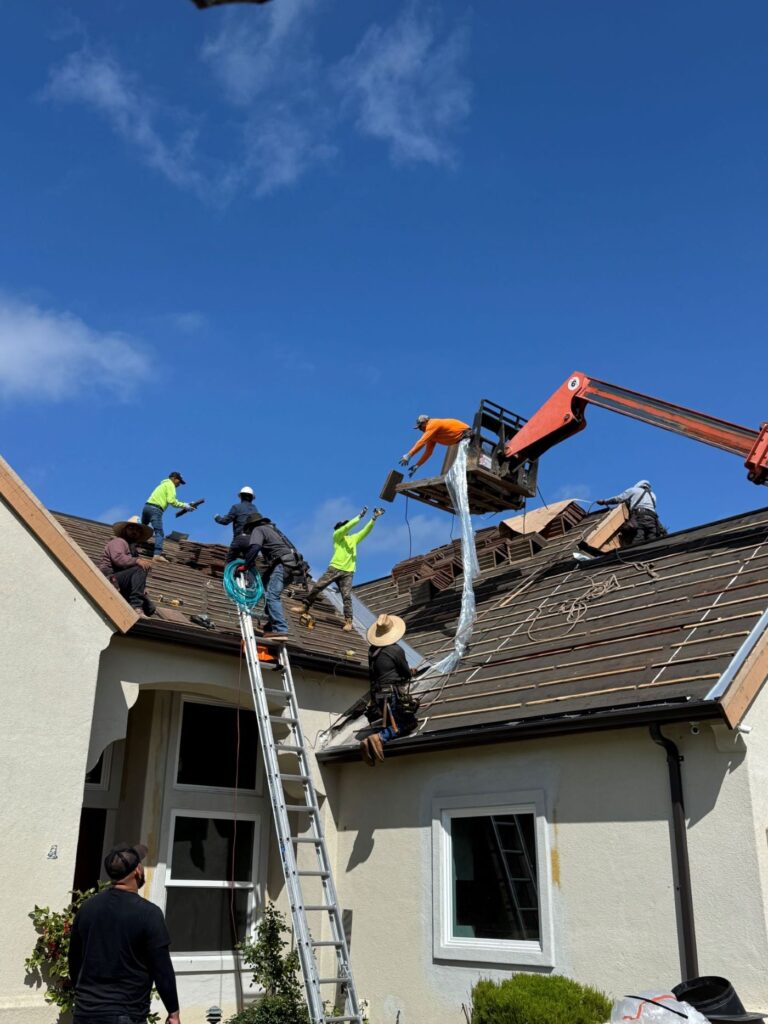
A few damaged tiles
An isolated tile roof repair may be appropriate when the surrounding roof is sound. Replacement pieces need a compatible profile and fit; color alone is not enough.
Leaks beneath intact tiles
Sound-looking tiles can sit above worn underlayment. The assessment needs to consider what can be accessed and repaired beneath them, and how lifted tiles will be handled.
Widespread roof problems
Repeated leaks, extensive breakage or damage affecting multiple layers may justify a broader replacement plan. The scope should explain why a smaller repair would leave important problems unresolved.
Check the fit and the roof structure
For an existing tile roof, matching the shape and connection details can be more important than finding a similar shade. Discontinued tiles may make a repair harder to blend or complete with compatible pieces.
For a material change, the roof structure needs attention too. Do not assume a house previously covered with shingles is ready for a heavier tile assembly. Structural review and permit requirements should be addressed before the material decision is final. The City of San Jose's reroof guidance outlines considerations for these projects.
Plan tile roof work in San Jose
A useful proposal separates the visible tile work from the layers underneath. It should describe the areas being opened, the tile selection or reuse plan, the underlayment and flashing work, and how additional decking repairs would be approved.
From tile assessment to the finished roof
Identify the work beneath the symptoms
Tell us where leaks appear and what repairs have already been attempted. We consider the tile condition and accessible roof details, then explain the proposed next step. The location of an indoor stain alone does not establish the full repair scope.
Plan removal, matching and access
Tile work requires a practical plan for handling materials around the property. Discuss which tiles will be removed, any proposed reuse, replacement compatibility and areas to protect below. Material weight and applicable structural requirements belong in planning when changing roof systems.
Review the layers and project closeout
Our written scope sets out the agreed work. Discuss how additional deck damage will be handled if it becomes visible during removal. At closeout, review the finished areas, cleanup and any questions about the completed work with the project contact.
Tile roofing questions
Can existing tiles be reused?
Sometimes. Their condition, compatibility, removal method and the availability of replacement pieces all matter. Reuse should be assessed and described in the scope rather than promised before the roof is reviewed.
Does one broken tile mean I need a new roof?
No. Isolated breakage may be repairable. The surrounding tiles, underlayment and flashing still need checking to establish that a localized repair addresses the problem.
Should I walk on the roof to find the leak?
Arrange an assessment instead. Walking on tile can damage it, and access can be hazardous. Share indoor leak photos and observations from ground level when you contact us.
Can I change the tile color during a replacement?
Discuss the available profiles and finishes during planning. A different product can affect fit, weight and detailing, so selection should follow a review of the roof. If only a section is being repaired, matching existing tiles may be the more relevant question.
What should I tell you before a tile roof visit?
Mention broken pieces visible from the ground, indoor leak locations, past repairs and any spare tiles you have. Note skylights or other work near the affected area. Leave roof access to the assessment team rather than walking across the tiles yourself.